
Fpcon levels: 10 Best Proven Ultimate Military Security Guides & Amazing Level Facts
Understanding military threat postures requires a thorough examination of force protection systems established by defense organizations worldwide. Defense installations maintain constant vigilance to protect personnel, assets, and surrounding communities from potential security threats. Base commanders utilize specialized security protocols to adjust defensive measures according to real-time risk assessments and intelligence indicators. When evaluating global security threats, military installations systematically modify access controls, facility entry procedures, and surveillance operations to maintain total operational readiness. A core element of this structured defense strategy involves evaluating various security measures including the official fpcon levels maintained across global defense facilities worldwide.
Quick Bio
| Subject | Force Protection Condition (FPCON) Framework |
|---|---|
| System Purpose | Standardized threat alert system for Department of Defense installations |
| Governing Agency | United States Department of Defense (DoD) |
| Alert Categories | Normal, Alpha, Bravo, Charlie, Delta |
| Implementation Scope | Global military installations, joint bases, and defense infrastructure |
| Operational Mandate | Dynamic security adaptation based on intelligence threat assessments |
Fundamentals of Military Force Protection Systems
Modern defense operations rely on structured frameworks designed to safeguard personnel, hardware, and sensitive military installations against unexpected external threats. Defense planners continuously evaluate potential vulnerabilities while establishing layered security measures across installations globally. Command structures ensure that defensive procedures adapt quickly to changing global events, intelligence reports, and strategic necessities. Security personnel undergo rigorous training to maintain operational vigilance during standard conditions as well as dynamic security emergencies. By establishing uniform alert procedures, defense organizations can ensure seamless coordination across different service branches during emergency scenarios. Effective base security depends on clear communication regarding standard military protocols including fpcon levels across commands.
Evolution of Defense Security Alert Statuses
Military threat evaluation systems have evolved substantially over past decades to meet emerging modern security challenges effectively. Historically, military bases utilized fragmented security metrics that varied significantly between different branches of military service. Defense leadership eventually consolidated these disparate security codes into a unified operational framework to simplify inter-agency communication. Standardizing security alerts allowed joint commands to coordinate defensive measures efficiently across international operational areas. Today, defensive frameworks provide actionable guidelines for installation commanders facing various asymmetric threats, civil disturbances, or terrorist risks worldwide. Modern security officers constantly review operational directives related to varying fpcon levels during global military preparedness drills.
Operational Mechanics of Base Threat Postures
Implementing threat mitigation procedures involves a complex coordination process across base logistics, administrative units, and law enforcement components. When defense analysts identify potential risks, security commands receive immediate notification to adjust physical protection protocols accordingly. Installation commanders evaluate local factors alongside national security guidance to select appropriate operational postures for their facilities. Defensive changes directly impact gate operations, vehicle inspections, delivery processing, visitor credentialing, and overall installation perimeter monitoring. Maintaining operational flexibility allows military bases to scale security upward rapidly without disrupting routine command functions. Defense officials evaluate current security conditions by systematically measuring active fpcon levels established across defensive sectors.
Force Protection Condition Normal Defined

The baseline operational state for military installations represents standard peacetime security operations without specific active threats present. Under normal conditions, military bases operate with standard perimeter safeguards, routine access control, and conventional security patrols. Service members, civilian employees, and authorized visitors experience minimal security delays when entering facilities under this default operational posture. Base infrastructure functions seamlessly while security teams maintain steady situational awareness and routine surveillance monitoring across all facility sectors. Establishing a reliable baseline enables defense administrators to measure security escalation effectively whenever specific threats materialize. Military bases maintain routine security protocols while operating under standard baseline fpcon levels during peaceful conditions.
Force Protection Condition Alpha Operational Measures
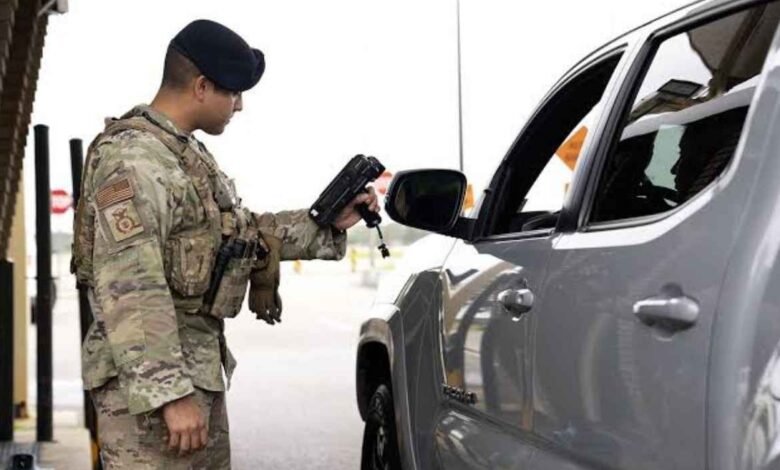
When a general threat of possible terrorist activity exists without specific intelligence regarding targets, defense postures escalate slightly. Security personnel implement enhanced screening protocols at installation entry gates while increasing random vehicle search frequencies. Facilities may restrict non-essential entry points, funneling base traffic through designated security checkpoints for better monitoring control. Civilian contractors and visitors undergo enhanced credential verification procedures to ensure proper security clearance before entry. Defense facilities maintain heightened vigilance without significantly interrupting routine administrative or operational mission tasks across the installation. Installation security commanders carefully monitor general threat indicators while enforcing active baseline fpcon levels during initial escalations.
Force Protection Condition Bravo Security Procedures
An increased or more predictable threat of terrorist activity prompts military facilities to transition into heightened security protocols. Under this intermediate posture, installations enforce mandatory vehicle inspections, expanded perimeter patrols, and stricter visitor credentialing rules. Defense personnel closely track all incoming deliveries while restricting access to critical infrastructure, command centers, and weapons storage. Installation entry gates experience moderate traffic delays due to thorough physical inspections conducted by armed security details. Base leadership communicates updated safety directives to service members and resident military families living within installation perimeters. Military security teams execute thorough counter-terrorism procedures when adjusting active baseline fpcon levels to increased states.
Force Protection Condition Charlie Tactical Steps
When an incident occurs or intelligence indicates imminent hostile action, defense facilities rapidly implement restrictive protective measures. Installations immediately secure non-essential facilities, restrict public gatherings, and limit base entry strictly to mission-essential personnel only. Armed perimeter guards reinforce installation access gates, conducting meticulous security searches of every vehicle attempting entry. Base housing residents, civilian personnel, and contractor staff face stringent movement limits and mandatory identification checks across all sectors. Defense commanders prepare military facilities for immediate operational disruptions while maintaining direct communication with regional strategic commands. Base personnel strictly adhere to aggressive physical defense directives whenever installations reach high fpcon levels during crises.
Force Protection Condition Delta Emergency Protocols
The highest security alert status applies to immediate areas where a terrorist attack has occurred or is imminent. Military bases initiate complete lockdown procedures, closing installation gates entirely and halting non-essential movement across facility grounds. Armed security units deploy to defensive positions, establishing hardened checkpoints and monitoring critical infrastructure assets continuously. Base personnel take immediate protective cover, following emergency directives while command teams coordinate tactical security responses. Facility entry remains strictly prohibited for unauthorized individuals until command authority confirms the immediate danger has passed completely. Defense forces maintain maximum operational readiness while operating under critical emergency fpcon levels during severe threat conditions.
Role of Installation Commanders in Security Escalation
Base commanders possess delegated authority to adjust installation security measures based on localized threat intelligence assessments. Command decisions draw upon comprehensive input from military intelligence officers, federal law enforcement, and national security agencies. While higher headquarters may mandate minimum security baselines, local commanders can elevate local protection measures as necessary. Decisive command action ensures military personnel, infrastructure assets, and surrounding defense communities remain thoroughly protected against threats. Leaders balance operational security requirements against daily mission needs to prevent unnecessary burnout among security forces. Installation leadership carefully weighs local threat indicators before declaring changes to active fpcon levels on base.
Impact of Threat Levels on Base Personnel
Security posture adjustments directly influence daily routines for service members, civilian workers, and military family members alike. Elevated alert states typically result in longer wait times at installation gates due to expanded vehicle inspections. Facility services, including commissaries, exchange stores, recreational centers, and administrative offices, may adjust operational hours or close temporary access. Personnel must carry valid military identification at all times and adhere strictly to base movement restrictions during alerts. Clear communication channels help base residents understand necessary safety measures and cooperate effectively with security details. Base populations remain resilient by staying informed regarding operational updates to local fpcon levels across installation gateways.
Access Control and Gate Security Protocols
Installation entry gates serve as the primary defensive shield separating military assets from external security threats. Security forces utilize physical barriers, surveillance systems, and trained military working dogs to inspect incoming vehicular traffic effectively. Elevated threat conditions mandate double-identification checks, automated credential verification, and comprehensive under-carriage vehicle inspections by armed guards. Traffic routing strategies direct incoming vehicles into designated inspection lanes to manage queue lengths while maintaining rigorous security. Entry protocols protect vital infrastructure without completely paralyzing necessary logistical movements entering military defense zones. Specialized gate teams enforce meticulous physical inspection procedures matching active global fpcon levels designated by military leadership.
Integration of Intelligence in Threat Assessments
Effective force protection strategies rely on timely, accurate intelligence provided by defense intelligence networks and federal agencies. Threat analysis centers evaluate global political stability, terrorist activity reports, and regional security indicators continuously. Intelligence findings allow defense planners to anticipate potential security hazards before hostiles execute offensive actions against targets. Standardized security metrics ensure intelligence data translates smoothly into concrete defensive postures at local installation levels. Defense organizations review security effectiveness regularly, refining alert response protocols to address sophisticated emerging security threats. Intelligence analysts provide vital risk assessments that shape structural adjustments to active fpcon levels across operational sectors.
Training and Exercises for Security Forces
Military security personnel undergo continuous tactical training to handle rapid transitions between various force protection statuses efficiently. Realistic readiness exercises simulate diverse threat scenarios, including unauthorized perimeter breaches, active shooters, and explosive hazard threats. Training programs emphasize rapid decision-making, defensive marksmanship, tactical perimeter control, and effective emergency communication during high-stress crises. Security forces practice joint response procedures alongside civilian law enforcement agencies to ensure seamless cooperation during real emergencies. Rigorous drill schedules ensure installation guards remain prepared to implement protective protocols without operational hesitation. Security units undergo rigorous performance evaluations while practicing emergency response to shifting fpcon levels during readiness drills.
Technological Enhancements in Facility Security
Modern defense installations deploy cutting-edge technology to reinforce physical security infrastructure and streamline access control procedures. Automated license plate readers, biometric scanners, and advanced video analytics assist security forces in identifying potential security risks quickly. Integrated sensor networks monitor installation perimeters continuously, detecting unauthorized intrusion attempts across vast geographic base areas. Remote surveillance platforms allow command centers to track security developments in real time during emergency situations. Implementing advanced security technology enhances physical defense capabilities while optimizing personnel deployment across installation sectors. Defense facilities integrate state-of-the-art surveillance hardware to support monitoring required across various fpcon levels in real time.
Coordinating with Civilian Law Enforcement Agencies
Defense installations maintain close working relationships with local, state, and federal law enforcement organizations surrounding bases. Joint security committees meet regularly to share threat intelligence, coordinate emergency response plans, and resolve perimeter security challenges. During heightened alert statuses, civilian law enforcement partners assist by managing off-base traffic congestion and patrolling surrounding civilian areas. Inter-agency communications protocols ensure seamless information sharing during multi-jurisdictional emergencies involving base security. Collaborative security operations enhance community safety while protecting vital military infrastructure from external hostile threats. Military leaders coordinate closely with civilian police partners when managing localized impacts of changing fpcon levels around installations.
Measures for Defense Contractors and Visitors
External personnel accessing military facilities must comply fully with security requirements established by installation command authorities. Defense contractors undergo background checks, security clearances, and vehicle screening before receiving temporary access passes. During elevated security statuses, visitor pass processing may be suspended completely to restrict non-essential foot traffic. Facilities require non-military visitors to maintain continuous escorts while moving through sensitive operational or research sectors. Security compliance ensures external partners contribute to installation safety without exposing military assets to potential security breaches. Visitors must adhere strictly to site access security directives dictated by active fpcon levels when visiting installations.
Physical Infrastructure and Barrier Systems
Hardened physical infrastructure provides essential perimeter protection against potential vehicle-borne explosive devices and unauthorized entry attempts. Installations utilize pop-up vehicle barriers, concrete bollards, serpentine entry lanes, and reinforced fencing along perimeter boundaries. Security architecture design funnels incoming traffic into designated inspection zones, slowing vehicle speeds to allow effective security checks. Critical facilities within base perimeters feature additional physical protection measures, including standoff distances and blast-resistant structures. Robust barrier systems prevent aggressive physical intrusions while giving security details sufficient reaction time during emergencies. Facilities maintain physical perimeter structures designed to support defensive postures matching operational fpcon levels enforced on site.
Logistics and Supply Chain Security Safeguards
Maintaining secure supply lines remains vital for military installations during routine operations as well as elevated security alerts. Commercial delivery trucks undergo rigorous physical inspections and cargo verification before gaining entry to base logistics centers. Defense facilities establish dedicated inspection facilities away from main entry gates to search incoming freight thoroughly. Logistical planning ensures essential supplies, food, fuel, and medical inventory continue reaching base populations safely during lockdowns. Security protocols safeguard military supply chains against potential sabotage, contamination, or unauthorized tracking by hostile entities. Logistics personnel enforce strict cargo verification procedures consistent with prevailing regional fpcon levels maintained across supply hubs.
Psychological Preparedness and Base Communication
Clear, reliable communication builds community trust and maintains orderly responses during security disruptions or sudden base lockdowns. Installation public affairs offices issue regular updates via official social media, emergency messaging systems, and base broadcast channels. Clear instructions help military families understand security rules, minimizing panic and ensuring cooperation with base guards. Psychological preparedness programs educate personnel on maintaining personal vigilance and reporting suspicious activities to security forces immediately. Informed base communities serve as effective security multipliers by identifying unusual activity surrounding military facilities quickly. Public communications channels keep military families well informed regarding changes to local fpcon levels across installation housing sectors.
Future Trends in Military Force Protection
As global security dynamics evolve, defense organizations continuously adapt force protection strategies to counter emerging technological threats. Future security protocols must address unmanned aerial systems, cyber-physical intrusions, and hybrid warfare tactics aimed at military bases. Automated security platforms, artificial intelligence threat detection, and autonomous perimeter patrols will likely augment human security details. Standardized security metrics will continue evolving, incorporating digital defense procedures alongside physical security measures across commands worldwide. Defense infrastructure will remain resilient by combining advanced technology with time-tested security management frameworks globally. Modern defense planners continue refining tactical alert metrics including traditional fpcon levels to counter next-generation security threats effectively.
Frequently Asked Questions
- What are the five official Force Protection Conditions used by military bases?
- The five conditions are Normal, Alpha, Bravo, Charlie, and Delta, representing escalating threat levels.
- Who holds the authority to change security threat levels on a military installation?
- Installation commanders possess delegated authority to adjust base threat postures according to intelligence assessments.
- How do elevated security postures affect daily entry procedures at military gates?
- Elevated conditions cause longer gate delays due to mandatory vehicle searches and strict credential checks.
- Can civilian visitors enter military bases during high security alerts?
- Visitor access is strictly limited or completely suspended during elevated conditions like Charlie or Delta.
- Where can military families find official updates regarding base security changes?
- Families can check official base social media accounts, installation websites, or emergency notification systems.