
Incfidelibus: Experimental Music Project & Label Explained

Incfidelibus represents a fascinating linguistic phenomenon in modern internet culture, sitting precisely at the crossroads of classical Latin research and digital algorithm dynamics. While appearing to be an ancient term at first glance, closer analysis reveals that incfidelibus is a nonstandard Latin variation largely driven by digital scanning anomalies and online search interest. Understanding its connection to actual Latin vocabulary helps clarify how historical phrasing and digital language evolution interact today. Exploring this keyword reveals much about human curiosity, linguistic transformation, and online information dissemination.
Quick Bio
| Aspect | Detail |
| Keyword | Incfidelibus |
| Primary Root | Infidelibus (Latin) |
| Grammatical Base | Dative / Ablative Plural of Infidelis |
| Core Concept | Faithfulness, Loyalty, Trust, and Unbelief |
| Origin Category | Digital Variant / Typographical Neologism |
Linguistic Origin of Incfidelibus
To trace the linguistic origin of incfidelibus, one must look directly into classical Latin root structures and grammatical formations. The closest verified Latin counterpart is infidelibus, which derives directly from the adjective infidelis, meaning unfaithful, disloyal, or untrustworthy. In standard Latin grammar, the addition of the prefix in- creates a negation of fides, which signifies faith and trust. The inserted consonant in incfidelibus does not conform to traditional Latin orthography, suggesting that the term emerged through transcription variations or modern digital typing habits rather than ancient classical literature.
Grammatical Structure of Incfidelibus

Examining the structural components of incfidelibus helps clarify why the word creates such immediate intrigue among language enthusiasts online. Standard Latin nouns and adjectives rely heavily on case endings to denote grammatical function, with the suffix -ibus marking either dative or ablative plural forms. When analyzing incfidelibus, the internal letter combination appears highly unusual because Latin prefixes rarely attach an additional internal consonant before the labiodental fricative sound. Therefore, analyzing incfidelibus requires acknowledging both its classical structural elements and its nonstandard internal composition.
Historical Context of Incfidelibus
In historical literature, concepts closely linked to incfidelibus routinely surfaced in medieval manuscripts discussing loyalty, faith, and societal obligation. Classical writers often referred to non-believers or individuals breaking covenants using the standard form infidelibus within legal, theological, and philosophical documentation. Modern discussions surrounding incfidelibus frequently draw upon these ancient historical contexts, attempting to map medieval concepts of betrayal and duty onto contemporary digital terminology. Recognizing this historical background provides essential clarity when evaluating how ancient prose influences modern internet keyword trends.
Relationship Between Incfidelibus and Infidelibus
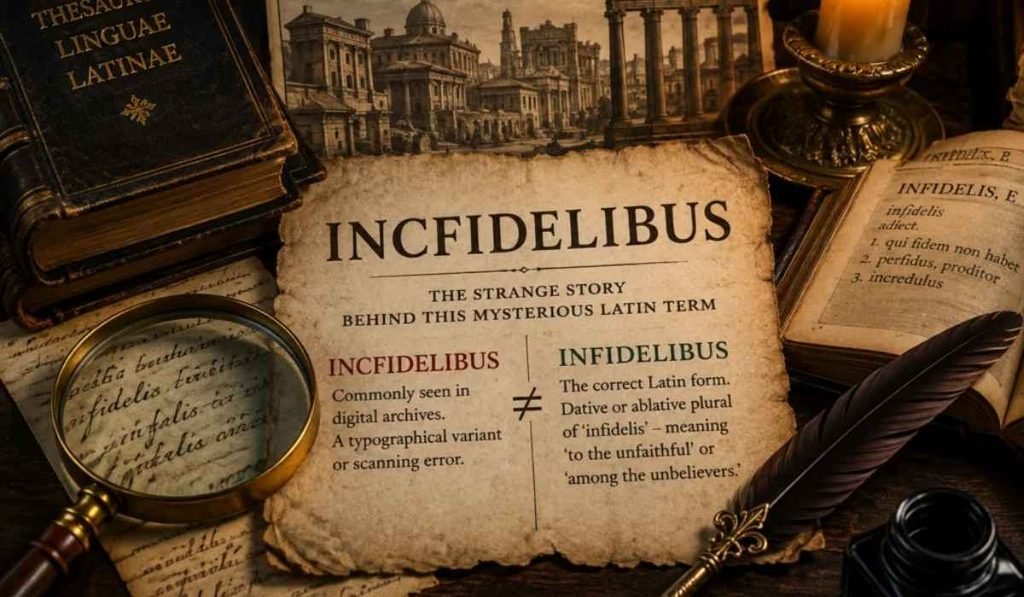
The primary distinction between incfidelibus and the authentic Latin form infidelibus lies in a single, extra internal letter. Grammatically, infidelibus functions as the plural form translating to “to, for, with, or by the unfaithful” depending entirely on sentence context. Online discussions regarding incfidelibus almost universally stem from search queries seeking clarification on this exact typographical variance. By recognizing that incfidelibus directly mirrors infidelibus in thematic meaning, readers can better navigate linguistic analyses without confusing modern internet variations with verified classical grammar.
Digital Scanning Errors and Incfidelibus
A prominent theory explaining the widespread emergence of incfidelibus involves Optical Character Recognition technology scanning historical print documents. When old books featuring worn typography or faded ink are digitized, scanning software occasionally misinterprets letter spacing, producing unexpected spellings like incfidelibus. Once these digitized texts enter online databases, web crawlers index the terms automatically, cementing their presence across global search engine algorithms. Consequently, incfidelibus serves as a primary example of how automated digitization processes shape modern search queries and vocabulary expansion.
Internet Trends and Incfidelibus

The rapid rise of incfidelibus across social media platforms highlights the unique mechanisms driving viral internet terminology today. Online gaming communities, fantasy writers, and digital creators often adopt distinctive terms like incfidelibus to construct evocative usernames, lore titles, or mysterious narrative elements. As digital interest grew, search engines indexed increasing volumes of content centered on incfidelibus, transforming a simple typographical anomaly into a widely recognized digital topic. Studying these online trends reveals how digital communities give new life to obscure linguistic variants.
Modern Interpretations of Incfidelibus
Contemporary commentators frequently associate incfidelibus with broader philosophical themes such as broken trust, interpersonal loyalty, and individual responsibility. While classical Latin focused primarily on religious or civic allegiance, modern discussions surrounding incfidelibus interpret the term through a psychological lens regarding digital identity and personal ethics. This shift in perspective demonstrates how terms like incfidelibus evolve past simple definitions, acquiring fresh layers of meaning through contemporary cultural discourse. As a result, the word continues to inspire creative writing and philosophical reflection.
Philosophical Meaning Behind Incfidelibus
Exploring the philosophical resonance of incfidelibus requires examining how humans perceive trust, betrayal, and moral duty in everyday life. Philosophers throughout history have analyzed the fragility of human promises, themes naturally echoed whenever incfidelibus is discussed in contemporary essays. Although the word itself lacks an ancient philosophical text directly attesting to its specific spelling, incfidelibus serves as an engaging conceptual anchor for exploring ethical choices. Examining these philosophical dimensions helps readers understand why mysterious terms capture public imagination so effectively.
Misconceptions Surrounding Incfidelibus
Numerous common misconceptions persist regarding the background, usage, and true linguistic status of incfidelibus across digital forums. A frequent error involves claiming that incfidelibus was an official motto used by ancient Roman military units or medieval orders. In reality, historical records verify that standard Latin forms were used exclusively, confirming incfidelibus as a modern digital evolution. Dispelling these widespread myths ensures that researchers approach incfidelibus with accurate historical knowledge rather than sensationalized online narratives.
Translation Nuances of Incfidelibus
Translating terms connected to incfidelibus demands a nuanced understanding of classical Latin case structures and prepositional relationships. Because Latin inflections alter word meaning based on syntax, rendering incfidelibus into modern English requires evaluating surrounding sentence structures carefully. Depending on context, related phrases can signify actions performed “by the faithless” or statements directed “to unbelievers” within formal prose. Appreciating these subtle translation nuances prevents overly simplistic definitions when analyzing incfidelibus across different academic and cultural settings.
Incfidelibus in Modern Media
In recent years, incfidelibus has made noticeable appearances across digital media outlets, independent blogs, and literary forums worldwide. Content creators frequently leverage the enigmatic appeal of incfidelibus to engage audiences interested in language mysteries, medieval history, and digital trivia. Its unique sound and visual structure make incfidelibus an appealing choice for storytelling, online branding, and atmospheric worldbuilding. Tracking these media representations illustrates how niche search queries gradually penetrate broader digital culture and media production.
Role of Incfidelibus in Worldbuilding
Fantasy authors and narrative game designers frequently utilize terms like incfidelibus to create rich, atmospheric settings for their stories. The Latinate phonetics of incfidelibus evoke a sense of ancient mystery, making it ideal for naming fictional factions, forgotten spells, or secret orders. By embedding incfidelibus within imaginative narratives, creators build compelling fictional worlds that feel grounded in classical history. This creative application highlights how nonstandard terms like incfidelibus find practical utility across modern entertainment and literary art.
Social Media Impact on Incfidelibus
Social media algorithms play a pivotal role in accelerating the visibility of unusual search terms like incfidelibus across global audiences. Content discussing obscure linguistic roots or digital mysteries involving incfidelibus often generates high engagement through shares, comments, and debate. As users search for incfidelibus across platforms, algorithms push related content further into public view, creating a self-reinforcing cycle of interest. Analyzing this social media dynamic offers valuable insights into how online trends form and sustain momentum today.
Analyzing Search Intent for Incfidelibus
Understanding why users search for incfidelibus reveals significant information about modern digital curiosity and academic inquiry online. Most individuals querying incfidelibus seek to clarify its definition, confirm its authenticity as Latin, or explore its viral origin story. By providing structured, fact-based analysis regarding incfidelibus, digital publications fulfill this explicit informational demand while correcting common internet misconceptions. Studying search intent surrounding incfidelibus highlights the importance of clear, accurate content delivery in search engine optimization.
Incfidelibus as a Case Study in Digital Linguistics
Linguists and digital historians frequently reference incfidelibus as an ideal case study demonstrating how online language evolves dynamically. The transition of incfidelibus from an obscure scanning artifact to a widely queried keyword illustrates the power of search algorithms in language dissemination. Observing how incfidelibus maintains search relevance without traditional dictionary backing provides valuable data for researchers studying internet terminology. This case study underscores the changing definitions of vocabulary in an increasingly digitized and interconnected world.
Ethical Dimensions of Incfidelibus
Discussing incfidelibus inherently touches upon ethical themes involving loyalty, honesty, and the consequences of broken trust within relationships. Modern essays focusing on incfidelibus often use the term to explore how personal accountability influences community stability and digital interactions. By examining these ethical dimensions through the lens of incfidelibus, writers encourage thoughtful reflection on personal integrity and mutual respect. These ongoing moral discussions ensure that incfidelibus remains a thought-provoking subject across modern content platforms.
Comparison of Incfidelibus with Classical Terms
Comparing incfidelibus directly against verified classical Latin vocabulary highlights important stylistic and grammatical differences for students of language. Classical Latin authors favored precise, standardized terminology, making the unusual consonant placement in incfidelibus stand out immediately to scholars. While authentic terms like infidelis followed strict morphological rules, incfidelibus represents the fluid, organic nature of modern digital vocabulary creation. Conducting these comparisons allows language learners to deepen their understanding of authentic Latin morphology while researching incfidelibus.
Incfidelibus in Gaming and Online Handles
Within online gaming environments, players routinely adopt incfidelibus as a unique handle to convey mystery, strength, or rebellion. The distinctive appearance of incfidelibus makes it an attractive choice for gamertags, guild names, and character titles across multiplayer platforms. As more players encounter incfidelibus within gaming lobbies, curiosity drives secondary web searches regarding its meaning and origin. This gaming connection demonstrates how interactive digital entertainment directly contributes to search engine query volume for terms like incfidelibus.
Educational Value of Studying Incfidelibus
Examining the story behind incfidelibus provides significant educational benefits for students learning language arts, history, and digital literacy. By analyzing how incfidelibus originated, learners practice critical thinking, source verification, and grammatical comparison between classical Latin and modern internet variants. Understanding incfidelibus teaches students not to accept online claims at face value without consulting verified academic references first. Ultimately, incfidelibus serves as a practical, engaging tool for developing essential digital literacy skills.
Future Outlook for Keyword Incfidelibus
The long-term trajectory of incfidelibus across search engine indexes will likely depend on ongoing digital interest and academic commentary. As search algorithms grow increasingly sophisticated, clear explanations distinguishing incfidelibus from standard Latin will remain essential for curious online readers. Whether incfidelibus remains a popular digital topic or fades back into obscurity, its history offers a compelling snapshot of modern language creation. Tracking terms like incfidelibus will continue providing valuable insights for search engine marketers and digital culture researchers.
Understanding the linguistic history of nonstandard words highlights how classical prose continues shaping modern digital communication. For readers seeking deeper research into authentic classical vocabulary and grammatical structures, consulting the official Latin language offers comprehensive academic information on classical inflections.
FAQs
- What is the meaning of incfidelibus?
- Incfidelibus is a modern nonstandard variant of the Latin word infidelibus, which relates to being unfaithful, disloyal, or unbelieving.
- Is incfidelibus a real Latin word?
- Incfidelibus is not a standard classical Latin word; the correct historical Latin spelling is infidelibus.
- How did the word incfidelibus originate online?
- The term likely originated from Optical Character Recognition scanning errors of old texts, which were later popularized through social media and online gaming.
- Does incfidelibus refer specifically to romantic infidelity?
- No, while related Latin roots involve unfaithfulness, classical usage broadly encompasses disloyal behavior, broken trust, and religious unbelief.
- Where can I find more information about Latin vocabulary?
- Comprehensive historical details regarding Latin grammar, classical vocabulary, and linguistic evolution are available through academic Latin reference resources online.




One Comment